

Target the wrong companies. Send generic, long winded messages. Lead with a weak offer. Wait hours, not minutes, to follow up after a warm signal.
Do all of this while selling something people do not urgently need.
Then, when the results are bad, blame outbound and say it no longer works.
Rubbish!
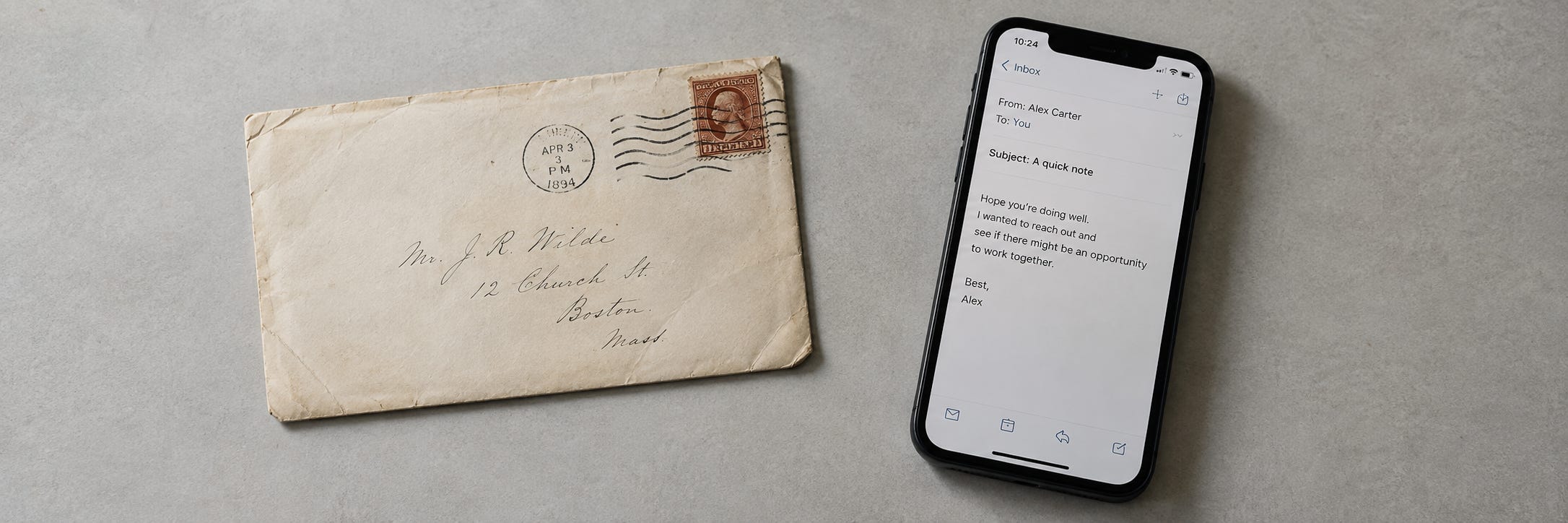
Businesses have used outbound to find customers for hundreds of years. Even as the channels have changed, it remains one of the most profitable ways to acquire clients.
In 2017, my agency started building an outbound program to generate ready to buy leads. Many of our early campaigns failed. We kept testing, studying what went wrong and changing quickly. Eventually, we found a repeatable formula.
Clients acquired through the program generated more than $100 million in lifetime revenue. For every $1 we spent to acquire them, we earned $4.70 in lifetime gross profit.
It only worked when the targeting, message, offer, timing, follow up and product worked together. Get a few of them wrong and the whole program falls apart.
Most of the mistakes that follow are ones I made myself. I still see companies repeat them all the time.
If your outbound isn't producing, check your program against these mistakes.
1. Putting someone in charge who cannot move fast
Your first campaigns will probably fail. What matters is how quickly you learn why and iterate.
The person running the program needs enough authority to change the targeting, message, offer and who gets each lead without waiting for a committee.
If every move requires consensus, weak campaigns stay live too long and it takes longer to find what works.
Once you find a formula that works, make it the standard so the team can run it quickly and with fewer mistakes.
2. Trying to sell to everyone
Trying to sell to everyone forces you to use generic language. Nobody reads it and thinks, “They understand me.”
We chose a narrow market with a clear set of problems. Then we built our services, outbound program and sales process around those problems.
That choice told our data team which companies belonged in the database. It told marketing what to talk about. It told sales which questions to ask and which services were most likely to help.

Be a big fish in a small pond.
But own the pond.
3. Building a new list for every campaign
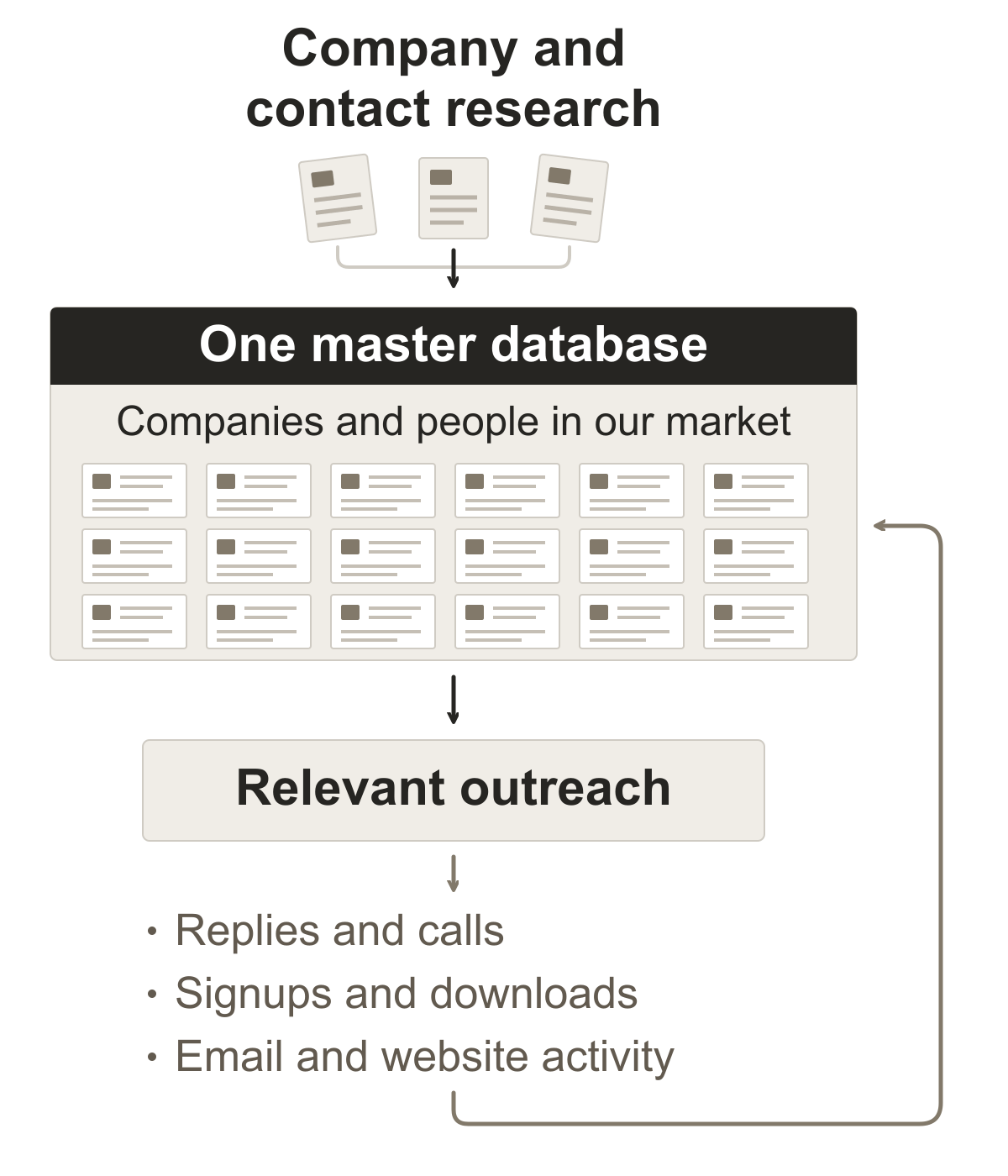
We wanted to find every company in our market that could benefit from our services. We kept one master database of those companies and the people we needed to reach.
Asking data brokers for every company that fit our criteria got us limited matches and a lot of bad ones. So we treated the market like an open case.
We scraped websites, investigated companies and pieced together what we could learn from different sources. Finding the right people often meant figuring out where they hung out online.
We didn't want to put someone into a campaign before knowing they were qualified.
We designed campaigns to learn what each prospect needed and whether they were ready to talk. We added what we learned from replies, downloads, webinar registrations, surveys and sales calls to their profiles. We used that information to decide who to contact, what to talk about and which service could help.
Once we had that data, we could automate much of the outreach and still send something that reflected what a prospect had told us or shown through their activity.
We kept refreshing those profiles as companies, contacts and their needs changed. We never started over with another list.
4. Juicing lead counts with paid blasts
Paid promotions through industry publications boosted our lead volume and made us look like geniuses. A few of those leads became good prospects over time. Most just became massive distractions.
Too few fit our specialty. We got better results reaching the prospects in our own database. They had become familiar with our content and our people over time.
For paid promotions, I'd look for small service companies already serving the exact clients you want. Make them referral partners.
You can guarantee them a minimum payment to promote your guides and webinars to their customers, then count it against their future referral earnings. They get another source of revenue, and you reach the right people through a company they already know.
Judge these promotions by qualified prospects and sales, not registrations.
5. Selling something people don’t urgently need
Your prospects don't care about you. They care about a problem that may hurt their sales, raise their costs or put their job at risk.
The problem has to be one they want to solve now, and it can't just be a 7 out of 10 problem.
It needs to be a 9 out of 10 or better.
In my experience, finding that problem is 80% of the work.
Rather than offering education for the sake of it, highlight a recent change in their market, explain why it matters and show what to do next.
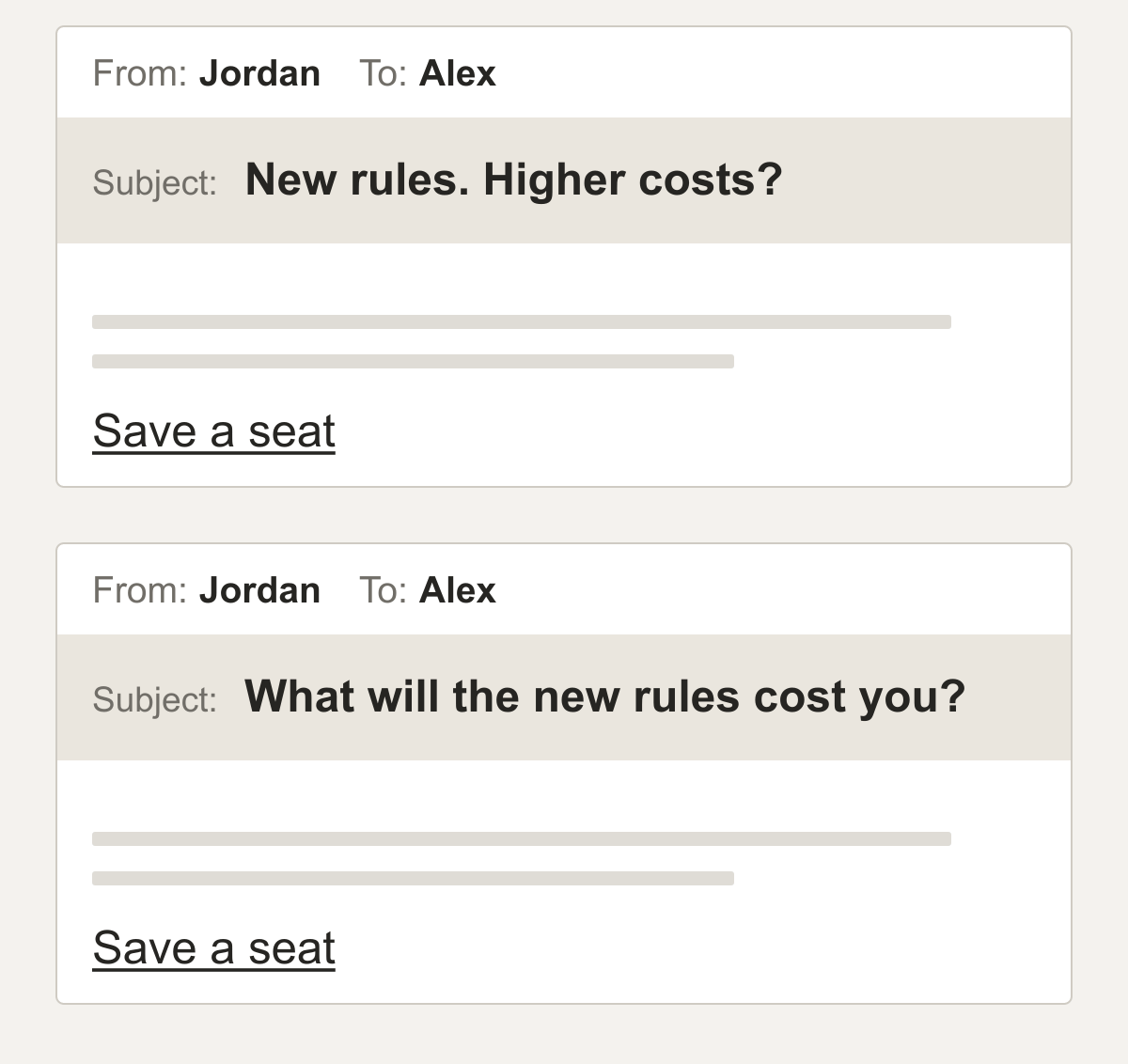
When the change involves a brand your audience cares about, lead with that name in the subject line and email.
Before rewriting another email, read the replies and talk to the people taking sales calls. You may have a weak message, or you may be selling a service that doesn't solve a painful enough problem.
6. Expecting strangers to trust you
Even an interested prospect may ignore you because they aren't sure you or your company are credible, or even real.
A long list of credentials makes the email about you again.
A brief reference to a relevant award or credible study in your signature or a P.S. can help. Keep it short and useful to the prospect.
I'd usually save those details for a later message instead of adding more to the first email.
7. Killing good leads with slow follow up
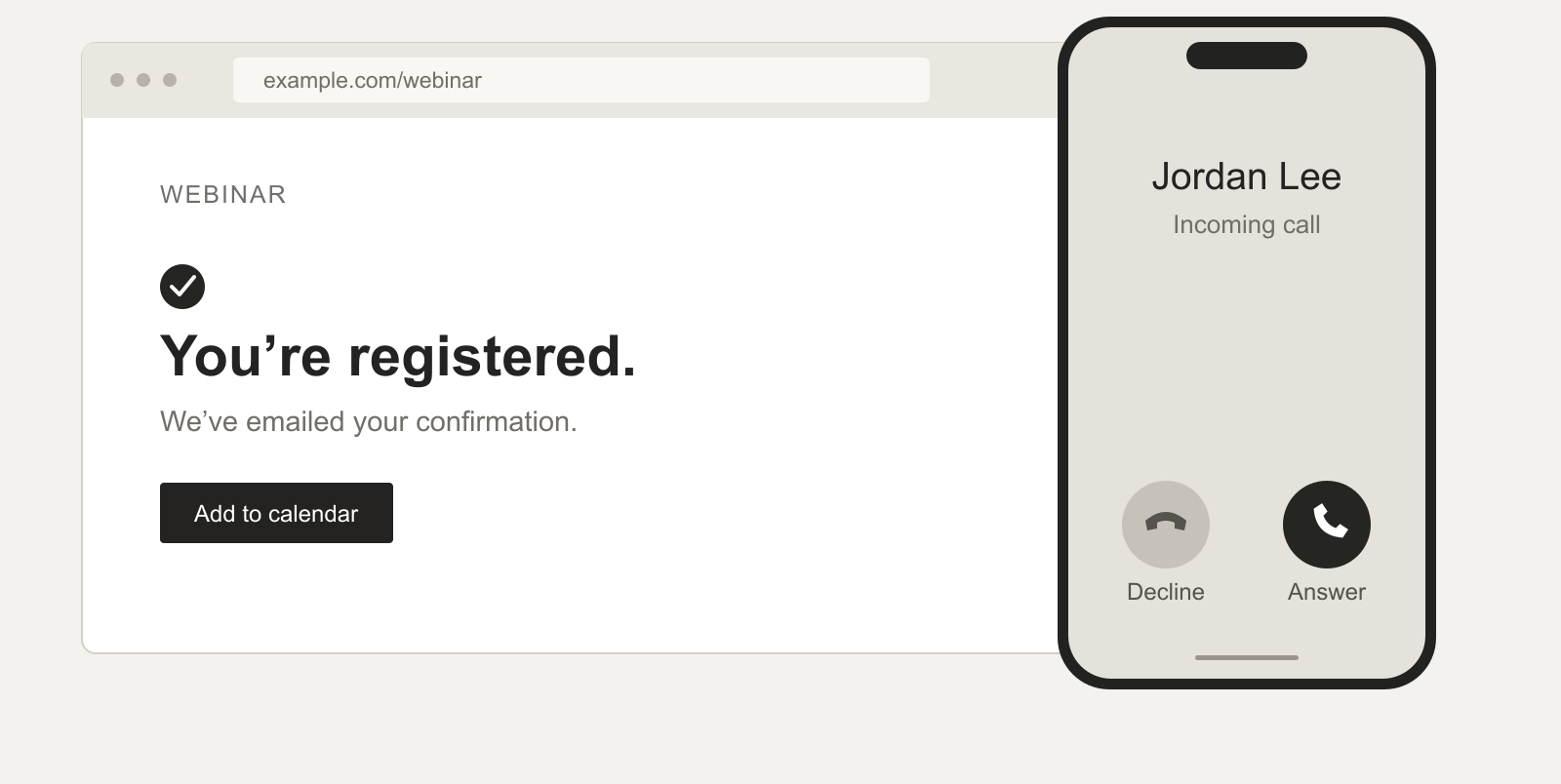
Someone signs up for your guide or webinar.
You wait for them to read the guide or attend the webinar. Then you wait a few more hours or days before calling.
They may never read the guide or attend the webinar. If they're a strong fit, the registration is enough reason to call.
I used to joke that a salesperson who thought calling a great new prospect within 60 minutes was fast was in the wrong line of work.
On campaign days, we watched every registration. Clear data rules sent the strongest matches to the right salesperson in seconds. Our sales leader handled the less obvious assignments. The goal was to reach the best prospects while they were still on our website.
8. Making every offer a meeting
We wanted prospects to reply directly to our salespeople.
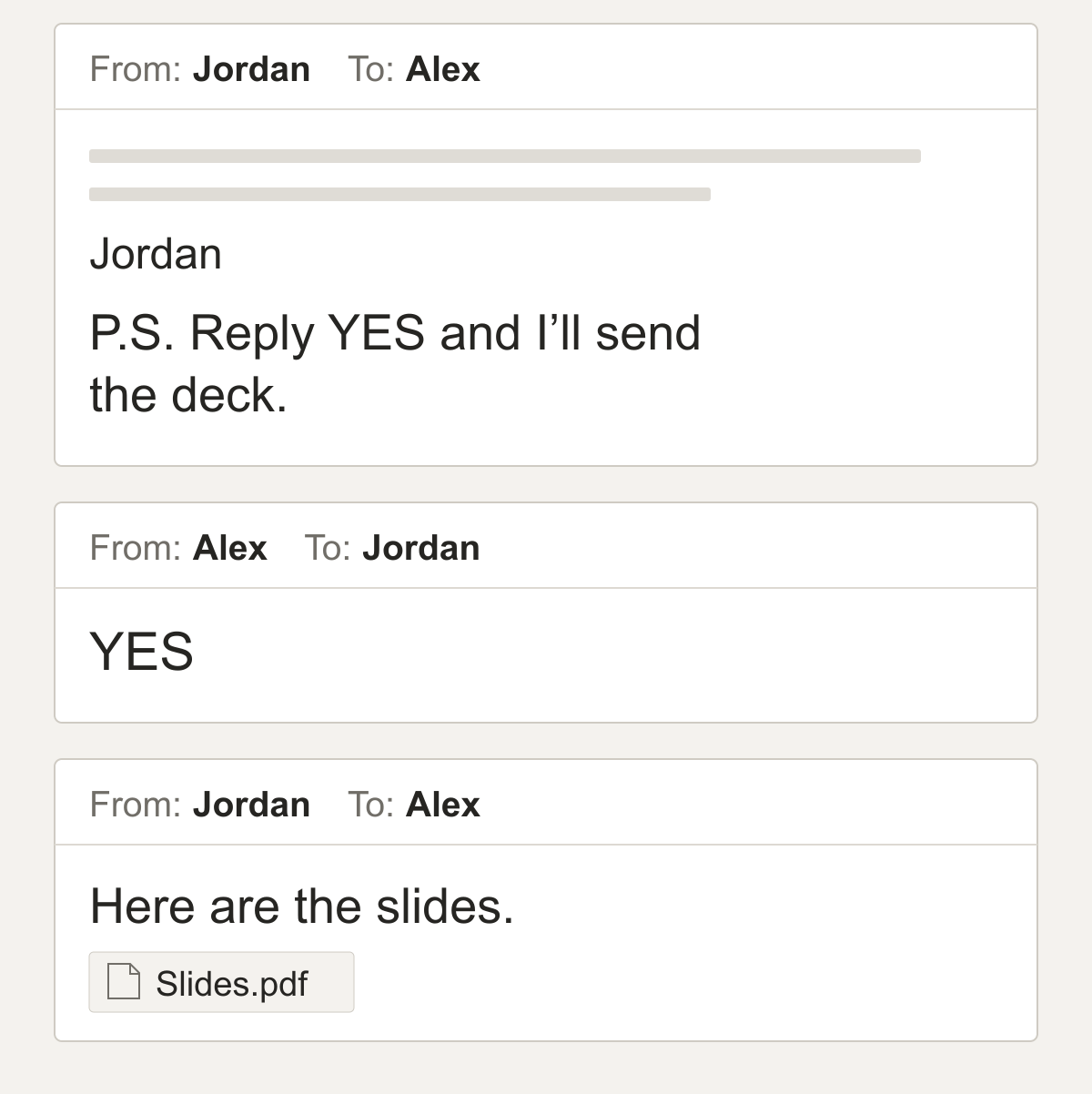
Plenty of prospects didn't want to attend a webinar. Fine. They wanted the slides. So the P.S. in our emails made a simple promise: reply YES and I'll send the deck.
That one word told us what they cared about. We sent the deck promptly, and the next email or phone call was no longer completely cold.
Over time, prospects started asking our salespeople for ideas and answers.
9. Making sales write every email
Depending on your market, booking 20 discovery calls in a week could mean emailing relevant content to 30,000 prequalified prospects. Of course, you don't want your salespeople writing that many emails by hand.
Our marketing team built each campaign email in... wait for it... Excel, with help from the person who knew the subject best.
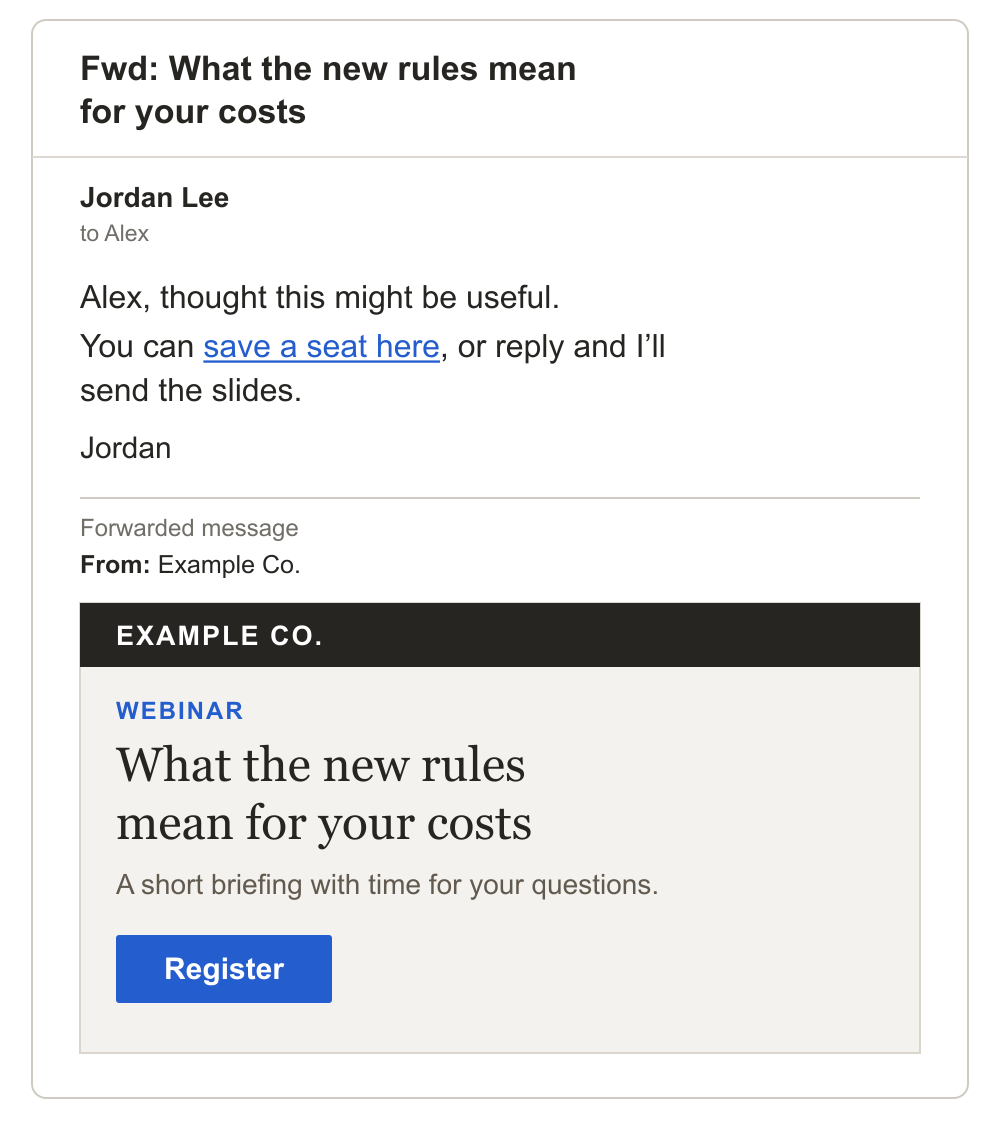
Coders put the email content into a template. A short note from the salesperson went on top, with a link or offer. It looked like they had forwarded something useful.
Most people who acted clicked the link in that short note or replied to the salesperson. Very few clicked the links in the designed email underneath. The professional design helped reassure people that we were a real company, and the details were there for anyone who wanted them.
The emails looked personal because we matched the problem and offer to the prospect. When someone replied, the salesperson took it from there.
10. Changing the formula because you get bored
We followed the same rules for emails, subject lines and landing pages. We had a formula for how many campaigns we ran, how often we promoted them, and which days and times we sent things. Sometimes we ran the same webinar again and again.
Those standards reduced mistakes and let a small team run a lot of campaigns. People began to expect our emails, look for our campaigns and return to our webinars.
Over seven years and thousands of campaigns, someone always wanted to reinvent the formula. Sometimes it was the natural urge to be creative. Other times performance had slowed, and changing everything felt easier than finding the specific problem.
Almost every time we got more creative, results got worse.
Reinventing the campaigns added work and made them less consistent. When we went back to the old formula and fixed the basics, especially bad or stale data, the results came back.
We kept testing one important change at a time. Change the audience, offer and subject line together and you can't tell which helped or hurt.
11. Reinventing the sales process for every deal
We standardized the sales process so everyone could keep getting better at the same steps. When we found a better way to do something, we taught the whole team.
Treating every sale as a custom project adds work, creates more room for mistakes and slows the deal. It also pulls your team away from other deals.
We learned to qualify carefully upfront. Interesting sounding deals outside our specialty rarely justified the extra attention they required. But qualification has to feel like talking with a knowledgeable consultant who understands the problem, not a bureaucrat checking boxes.
Nearly every deal went through the same five stages. Each prospect could get a very specific plan while the process for developing and presenting it stayed consistent.
We tracked how long prospects spent at each stage and how many moved to the next one.
Our instinct was to sell less, get in the door and expand later.
But close rates were higher when we proposed multiple services together.
Eventually, the average client bought four or more services at once.
Leaving out an important service just to make the first sale smaller could hurt the client's results and give them a reason to leave.
Learn from my mistakes
I made most of these mistakes. Fixing them helped us build a program that brought in great clients for years.
Pick a recent campaign that disappointed you and work through this list. Find the mistake doing the most damage, then fix it or give someone you trust the authority to act. Measure what changes... and iterate, iterate, iterate.
Scott
P.S. If you found this helpful, please share it with your colleagues and team. There's good business to win, and I hope this helps you win more of it.
For new articles, visit Smigler.com and subscribe free.
Want a PDF you can save or share with your team?
Subscribe free to download a copy and receive future articles.